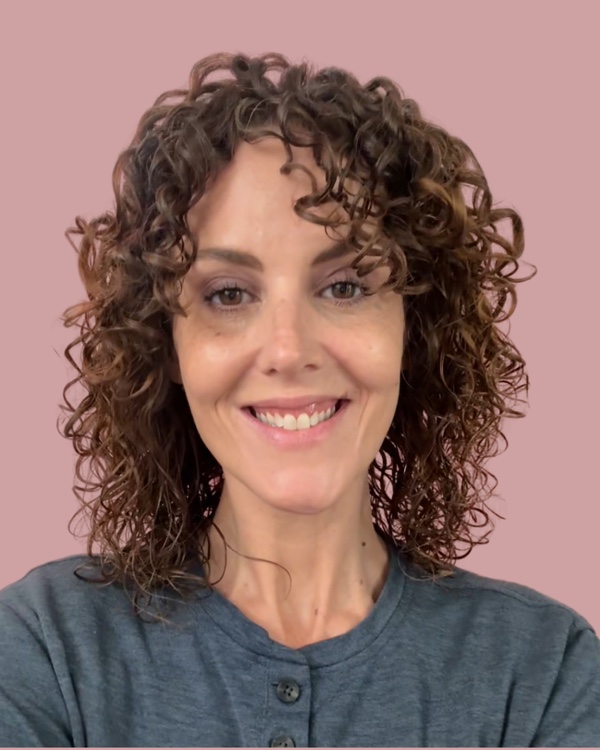
Hi, I'm Jenn.
I spent over a decade with young children. Public and private preschool classrooms, a home daycare, an elementary special education setting, and a stretch as a nanny.
I have a Master of Arts in Education from Pacific Oaks College, and before that, two undergraduate degrees in early childhood education and psychology. But the classroom is where I actually learned this job.
I built Planella because I know this job from the inside.
Here's what a preschool teacher's day actually looks like. You're moving from the second you walk in. Singing, observing, setting up activities, serving food, helping in the bathroom, running circle time, catching two kids working something out together and deciding in real time whether to step in or let it play out. You're tracking fine motor development in one child and a behavioral pattern in another. You're talking to a parent at pickup while you mentally reset the room for tomorrow. From the moment you get there to the moment you leave, your brain does not stop.
Nap time isn't a break. Nap time is when teachers cover each other for a thirty-minute lunch. Which means planning happens at lunch, or it happens at home at night. Materials get prepped after hours. A lot of preschool teachers build their own curriculum from scratch, every single week, on top of all of it.
This is the job I loved. It's also why I built Planella.
I've been out of the classroom a few years now, and ChatGPT wasn't a thing the last time I taught. What came after is genuinely powerful, and there's no reason preschool teachers shouldn't get the good of it. But the generic tools weren't built for our field, and it shows. Ask one to plan a preschool activity and you get "open-ended play," a few developmentally vague suggestions, no feel for how a real preschool morning actually moves. The model is smart enough. It just doesn't know preschool. So I built one that does.
After I finished my own training at SBCC's NAEYC-accredited preschool program, I stayed on for two years as a mentor teacher for the incoming student teachers. Watching someone grow into this work never got old.
They'd show up the first day nervous, and lesson planning alone could stop them cold once they realized how much real thought it takes. By the end of the semester, something had shifted. They knew their kids. Their plans weren't exercises anymore. They were answers to the actual children in front of them. The best moments were when a student teacher brought a piece of her own life into the room. A food from her family's kitchen, a song from her culture, a way of moving the children had never seen. You could watch the confidence build in real time. It's one of the most beautiful things I've ever seen in a classroom.
Planella comes out of what I saw across all those years. What you need from a lesson plan depends on where you are in the work. A student teacher needs the why behind every step. An experienced teacher just wants the plan, without the over-explaining. A homeschool parent needs the activity in plain language, no classroom jargon. It has a mode for each one. Same activity, three different plans, all framework-fluent. Whatever stage you're in, it meets you there.
Plan for play.